Barefoot for Real Life: Finding Balance in Children's Footwear
 In recent years, we have heard a lot about barefoot shoes or “respectful footwear.” For many parents, it has become a benchmark when looking for the best shoes for their children.
But when we talk about barefoot, it is important to remember something: reality is usually more complex than choosing between "barefoot yes" or "barefoot no."
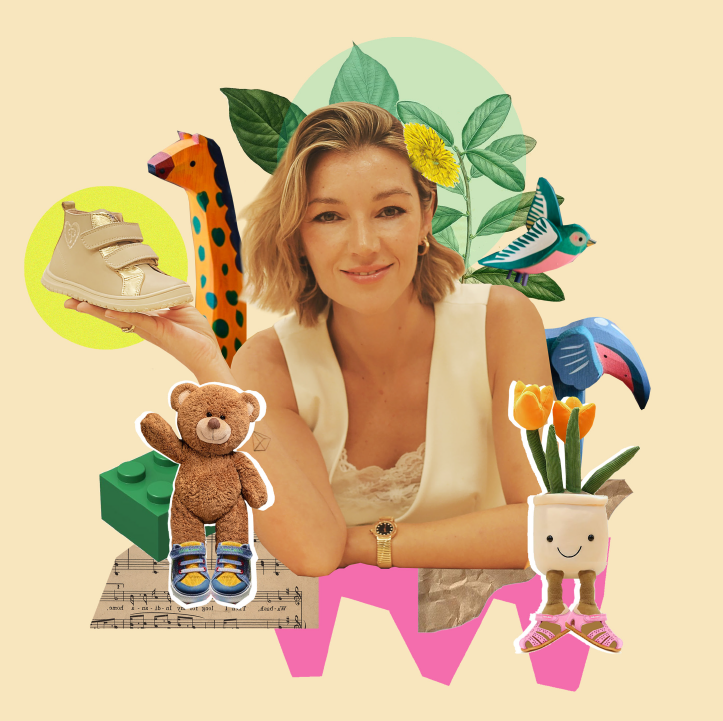
As Gabriel Gijón, podiatrist and president of the PABLOSKY-UCAM Children's Foot Health Chair (SAPI), explains: "the goal is not to choose a label, but to find the balance between freedom, protection, and adaptation to the environment in which children live."
That's what we call barefoot for real life.
What does it really mean to walk “like barefoot”?
The barefoot concept is born from an idea: to allow the foot to function as similarly as possible to when we walk barefoot.
That is why many of these shoes include features such as:
- Wide toe boxes that allow toes to move.
- Flexible soles.
- Little or no drop between heel and forefoot.
- Lightweight and minimally restrictive structures.
The intention is to interfere as little as possible with the natural movement of the foot.
And some studies suggest that spending more time barefoot during childhood may be associated with certain foot characteristics, such as greater forefoot width or greater toe mobility.
But here a fundamental nuance appears that we sometimes forget. The problem of the idealized vision of barefoot.
When we talk about walking barefoot, we usually imagine natural surfaces: grass, sand, dirt, or forests. However, the reality of today's children's environment is very different. Today, children spend much of their time walking on: asphalt, cement, hard school floors, urban pavements, sports surfaces.
That is, much harder and more artificial environments than those for which the human foot evolved. That is why we must be careful with an overly idealized view of barefoot.
In many contexts, footwear plays a fundamental role: protecting the foot and adapting it to the environment where the child moves. This does not mean that barefoot makes no sense. It means that we must understand it within the current reality.
“What scientific research tells us”
Scientific research on children's footwear has grown a lot in recent years. In a recent systematic review on the impact of footwear on children's gait, it was observed that the type of shoe can modify some biomechanical parameters of walking, such as foot mobility or pressure distribution. For example, some types of footwear can:
- Reduce toe mobility.
- Slightly modify the way of stepping.
- Alter the distribution of loads on the sole of the foot.
However, the same review also shows something very important: the scientific evidence is still limited and very heterogeneous.
The available studies use different designs, different types of footwear, and very varied populations. This means that we cannot state that a single type of shoe is universally better for all children.
Therefore, from the point of view of children's foot science, absolute answers rarely exist. Every child and every situation is different. The development of the foot depends on many factors: age, foot shape, physical activity level, type of surface where they play, time spent barefoot, even culture or the environment where they live...
Hence, not all children need exactly the same type of footwear.
A shoe suitable for walking in the countryside may not be the most appropriate for school. Footwear designed for running may not be the best for daily use.
The goal should not be to look for the perfect shoe, but the appropriate shoe for each situation.

What parents should look for when choosing children's footwear
Beyond commercial labels, scientific research agrees on several basic aspects that help choose a good shoe for children:
1. Toe space
The toe box should allow toes to move freely.
2. Sole flexibility
The shoe should bend where the toes bend.
3. Good fit to the foot
Neither too loose nor too tight.
4. Lightness and comfort
The child should be able to move naturally.
These principles help the foot to move and develop normally, while maintaining the necessary protection.
When we talk about evidence-based children's footwear, probably the best conclusion is this: neither barefoot all the time, nor with just any shoe all the time.
The most sensible approach is to seek a balance between freedom and protection. Allowing the feet to move, but also protecting them from the environment in which children live today.
That balance is precisely what the concept of realistic barefoot tries to reflect: footwear that respects the child's foot, but also understands the reality of their daily life. Because in the end, the goal is not to follow a trend. The goal is to take care of the healthy development of children's feet.
Because in the end, it's not about choosing a label.
It's about understanding what each foot needs in its daily life.Barefoot, yes.
But for real life.
Gabriel Gijón
Podiatrist · President of the PABLOSKY-UCAM Children's Foot Health Chair (SAPI)