01
Owned campaigns and channels
We will stop showing identifiable faces of minors in our campaigns, website, social media, newsletters, and other corporate materials.
Let children continue to be the protagonists of their own adventures. Not of our campaigns.

At Pablosky, we have been taking care of children's feet for over 50 years. But the context has changed, and caring means asking new questions: how can we protect their childhood in the digital world as well? Today, an image can circulate, be saved, and remain long after the moment it was shared.
That is why the Pablosky Commitment was born, a brand decision to stop showing identifiable faces of minors in all our communications and to represent childhood through play, movement, and real life.
Changing how we look. Changing how we care.
For Pablosky, it means representing childhood without compromising their privacy. As a brand, and as parents, we believe that protecting it also implies changing the way we do things. With this goal in mind, we are committed to more conscious, respectful, and responsible communication.
This is our commitment.
The context has changed, and our criteria had to as well.
We are used to seeing images of boys and girls as a natural part of communication about childhood. But today, the reality is very different. The evolution of social media, the advancement of artificial intelligence, and new digital habits force us to treat images of children with greater caution. And as brands, we have a fundamental role to play.
That is why, at Pablosky, we have decided to take action, questioning how we represent childhood and starting with what we can control: our own communication.

The images were shared naturally.
They circulate, remain, and can change context.
No more faces at Pablosky
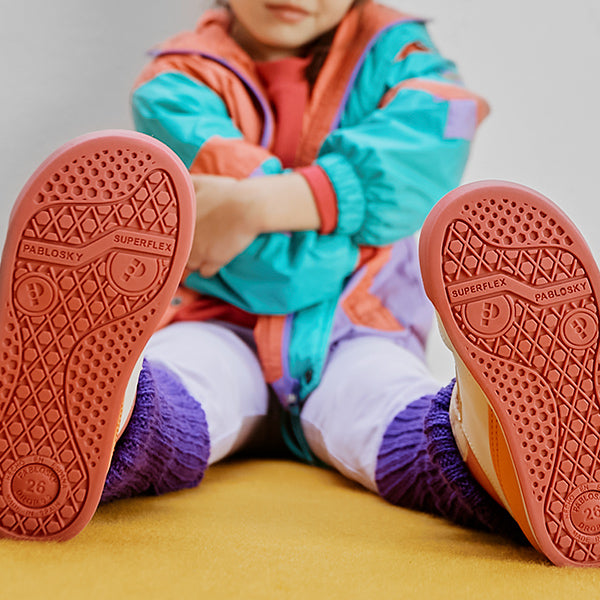
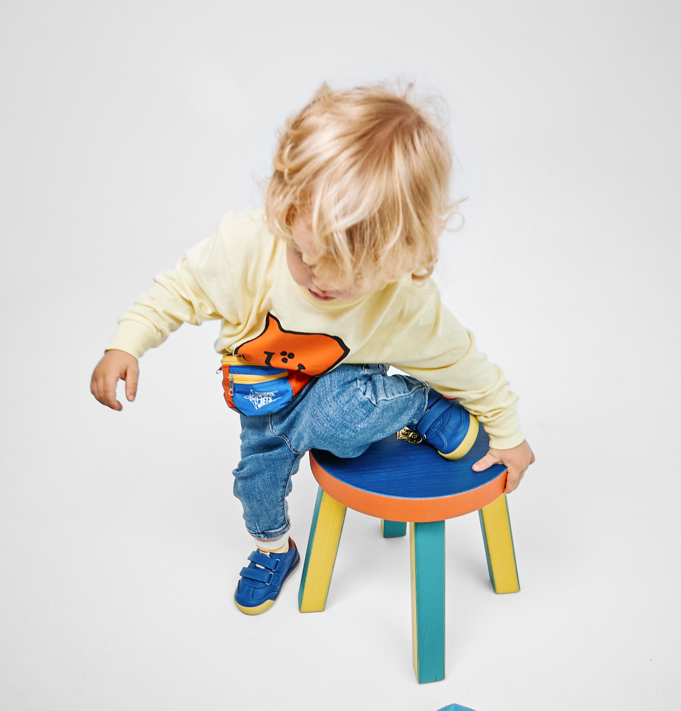
With this commitment, Pablosky changes its perspective. Children will remain the protagonists, but the emotion will not depend on their faces, but rather on their stories, their shoes, the movement, and the real truths of raising children.
We will stop showing identifiable faces of minors in our campaigns, website, social media, newsletters, and other corporate materials.

Creativity is our ally in finding new perspectives and resources that help us portray childhood in a more conscious and anonymous way.

We will review and adapt our commitment based on the evolving context, social conversation, and the recommendations of the experts advising us.
We will continue to show childhood as we have always understood it: active, real, free, everyday, imperfect and full of important moments.
We are committed to protecting what belongs to every child: their identity.
Children remain the protagonists.
His face, no.
At Pablosky, we have always been attentive to the concerns of families. And to do so in the best way possible, we have surrounded ourselves with those who know best.
In this new commitment, we move forward accompanied by the judgment of expert professionals who help us to keep learning and acting with responsibility.

We do not want to lecture anyone. This is a decision about how Pablosky wants to act from now on. If children are at the center of our brand, they must also be at the center of our decisions.
The problem with a photograph is no longer just who can see it, but everything that can be done with it.
On the internet, a child's image is never just an image. Protecting it starts with reducing its exposure.
When we say we listen, we mean it. That is why at Pablosky we are promoting a study with the participation of more than 1,000 families in Spain with underage children to understand how they experience child privacy in the digital environment today. The results show a growing sensitivity regarding the circulation of images of minors, the loss of control over what is shared, and the impact of artificial intelligence.
He believes that sharing images of minors can affect their future privacy, even when done with good intentions.
He states that artificial intelligence has changed his perception of the risk of sharing images of minors.
Do you think we adults are creating a digital identity for minors before they can decide on it themselves?
Interpret that a children's brand not showing identifiable faces is a matter of protection, responsibility, or caution.
Source: TOLUNA study for Pablosky / sample: 1,126 fathers and mothers in Spain with children aged 0 to 13.
Because the context has changed. Images of minors today can be circulated, saved, and reused in ways that did not exist before.
No. Boys and girls will continue to be part of the Pablosky universe. What changes is how we showcase it.
Images where the minor's face allows them to be clearly identified. The new standard prioritizes resources where the identity is not the focus.
We do not stop showing childhood. We change the way we protect it.
We will show
We will avoid
Yes. Pablosky will continue working with boys and girls in its productions, applying a new visual criterion.
No. The commitment is not about replacing real childhood with AI, but rather representing it consciously and responsibly.
Pablosky will be reviewing its own channels and materials. On third-party platforms, it will share new materials and recommendations to support the transition.
It is a brand commitment. It is not a one-off action or a temporary campaign.
At Pablosky, we will accompany all our partners, clients, and friends through this new visual identity. Over the coming months, we will carry out a gradual implementation plan with our external collaborators.
We have been committed to caring for your feet for over five decades, but now we are also dedicated to protecting everything that makes your childhood special.
We are certain that we will continue to connect with the same emotion, but this time, with our sights set on their feet.
Because this is our adventure.We are mothers and fathers.And we make shoes.