When to put the first shoes on a baby
When a baby arrives home, one of the first purchases everyone is excited to make is a pair of shoes. But do they really need them yet? Spoiler: almost never as soon as we think. We'll tell you, without stress and stage by stage, when it makes sense to put on their first shoes and what to look for when the time comes.

A baby doesn't need shoes until they start walking outside the house. Before then, at home, it's better for them to be barefoot or wear non-slip socks, because their feet are developing and learn by feeling the ground. The first shoes come with the first steps outside, and they should be flexible, light, have good support, and a sole that bends easily.
Baby's feet before walking: why barefoot is better at home
A baby's foot is still developing, and the best way for it to grow is by allowing it to move freely. At home, going barefoot helps them feel the ground, grip with their toes, and build their muscles and balance. Before they walk, shoes serve no real purpose beyond warmth, and socks or booties are sufficient for that. In other words: as long as they're not walking outside, a baby's foot gains nothing by wearing shoes at home; quite the opposite.
When to start using shoes
The signal isn't age, it's the milestone: shoes come into play when the baby starts walking outside the house. Every little one has their own pace, so pay more attention to what they're doing than to the calendar.
Crawling and pre-walker stage
While crawling or pulling themselves up on furniture, your baby doesn't need shoes to walk, because they aren't walking yet. During this phase, indoors, bare feet or non-slip socks are ideal. For going outside or in cold weather, very flexible pre-walker shoes protect without getting in the way.
First steps, inside and outside the house
When they start taking their first steps, they can continue to be barefoot indoors, as this is how they learn best. For outside, the first real shoe comes in: one that protects the foot from the ground and cold, but still allows it to move naturally.
What the first shoes should have
When the time comes, look for four things. Flexibility, so the sole bends and conforms to the foot. Lightness, so they don't drag heavy weight. Gentle support, so they stay on well without squeezing. And a thin sole that lets them feel the ground. Not stiff, not heavy, and not with too much cushioning.
Barefoot, non-slip socks, or shoes: when to use each
The rule is simple. At home, barefoot whenever possible, and non-slip socks when it's cold or the floor is slippery. Outside the house, shoes, which protect from the ground, temperature, and whatever they encounter along the way. Each option has its moment, and there's no need to overbuy.
Pablosky first step shoes by stage
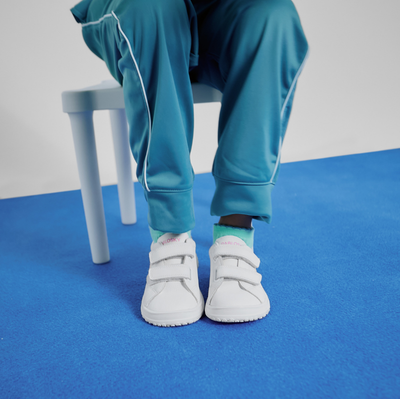
With clear criteria, it's easy to find what your little one needs at each stage. Our pre-walker and first steps ranges are designed to support developing feet: flexible, light, with gentle support and easy fastenings so they can start gaining independence.
Common mistakes when shoeing too early
The most common mistake is putting shoes on too early, when the baby isn't walking yet, more for aesthetics than necessity. Other classics: choosing a stiff or heavy shoe that's hard for them to move, getting a size too small for fear it will be loose, or wearing shoes indoors that prevent them from feeling the ground. And be careful about inheriting used shoes for first steps: every foot is different, and footwear deformed by another child won't provide the same support. Less is more.
Frequently asked questions
Does a newborn need shoes?
No. A newborn doesn't walk, so they don't need shoes for their real function. Soft socks or booties are enough to keep their feet warm. Shoes come much later, with their first steps outside.
Do they need to wear shoes at home?
No. At home, it's best for developing feet to be barefoot, and wear non-slip socks when it's cold or the floor is slippery. Shoes are for going out, not for being in the living room.
What should a baby's first shoe have?
Flexibility, lightness, gentle support, and a thin sole that bends easily. It should protect the foot without hindering its natural movement. And, as always, the correct size with a small margin for growth.
No rush, no stress. When the time comes, explore our first steps shoes and enjoy the milestone.