Benefits of barefoot shoes for children
Some say it strengthens the foot, others that it's the most natural option, and some claim it's useless. Everything is said about barefoot shoes, and not always with sound judgment. Let's separate the wheat from the chaff. We have been walking alongside growing feet for more than 50 years, so we will tell you what barefoot footwear truly offers your child, with its nuances and without false promises. After all, we are parents making shoes, and we know how easy it is to feel overwhelmed with so much information floating around in parenting groups.

Barefoot footwear can promote the natural development of a child's foot: it allows the toes to move, helps to exercise the muscles, and promotes proprioception, balance, and a more natural gait. However, it is not magic, and it doesn't suit everyone in the same way. A gradual transition is recommended, and if you have concerns such as flat feet, consult a professional.
What is barefoot footwear and how does it differ?
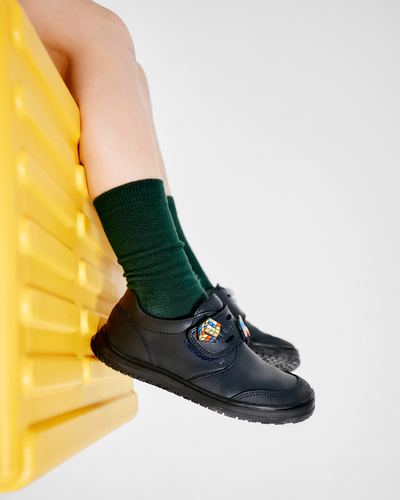
Barefoot footwear seeks to mimic the sensation of being barefoot. It is recognized by four features: a wide toe box, a thin and flexible sole without cushioning, zero-drop (meaning the heel and toe are at the same height), and great lightness. Compared to conventional, more rigid and cushioned shoes, barefoot shoes allow the foot to do its work. You can find a detailed explanation on our barefoot children's footwear page.
Main benefits for the developing foot
We use the conditional intentionally because these are benefits that barefoot footwear can promote, not absolute promises. Every foot is unique.
Freedom of movement and foot musculature
By allowing space for the toes and not immobilizing the foot, barefoot shoes allow the muscles to work with natural movement. The foot is not parked inside the shoe; it participates.
Proprioception and balance
With a thin sole, the foot better senses the ground it steps on. This information aids proprioception, which is the awareness of one's own body in space, and with it, balance and coordination. In practice, this translates into children who climb, run, and stop with a bit more confidence, because their foot is reading the terrain instead of going blindly.
Natural gait and weight distribution
Without a height difference between the heel and toe, barefoot shoes promote a more natural gait and a more balanced weight distribution between the forefoot and heel, just as the foot would land barefoot.
What barefoot shoes do NOT do: myths and realistic expectations
This is where we get honest, which is very much our style. Barefoot shoes do not correct pathologies on their own, they are not the best option for all surfaces or for high-impact sports, and they do not suit all feet equally. Nor are they a magic switch: the benefits come with continuous use and adaptation. Barefoot for real life, not barefoot by the book.
When it is suitable and when to consult first
Barefoot footwear is not suitable for every foot without further consideration. If there is a flat foot, discomfort, or any concern about foot health, the first step is to consult a professional. A gradual transition is advisable, and it should be avoided on very hard or uneven surfaces for extended periods, or during high-impact sports. Our clear stance on this is available in Respectful Shoes: What we do and what we don't do.
How to start with barefoot shoes for children
The key is progressive transition. Start with short periods, at home or in the park, and gradually extend the time as the foot adapts. For babies and first steps, barefoot shoes come naturally because the foot is still forming; for older children transitioning from conventional footwear, give it time. A good time to start is on the weekend, when you spend more time at home or outdoors and are not tied to school schedules. And if you notice that they are dragging their feet, complaining, or constantly taking them off, don't force it: slow down and try another day. Every child adapts in their own way, and it's perfectly fine to go slower than the child at the park.
Explore the barefoot collection by stages when you're ready to take the step.
Frequently Asked Questions
Is barefoot footwear suitable for all-day wear?
With adaptation and on suitable surfaces, yes. If your child is used to conventional footwear, a gradual transition is better before wearing them all day.
From what age can a child wear barefoot shoes?
There are options designed for pre-walkers and first steps from a very young age, always prioritizing lightness and flexibility. Each stage has its barefoot footwear.
Are barefoot shoes suitable for children with flat feet?
Not automatically. At Pablosky, we recommend that, in the case of flat feet or any specific foot condition, you first consult a specialist, who will assess whether it is appropriate in that particular case.